A Serpent Made of Sunlight
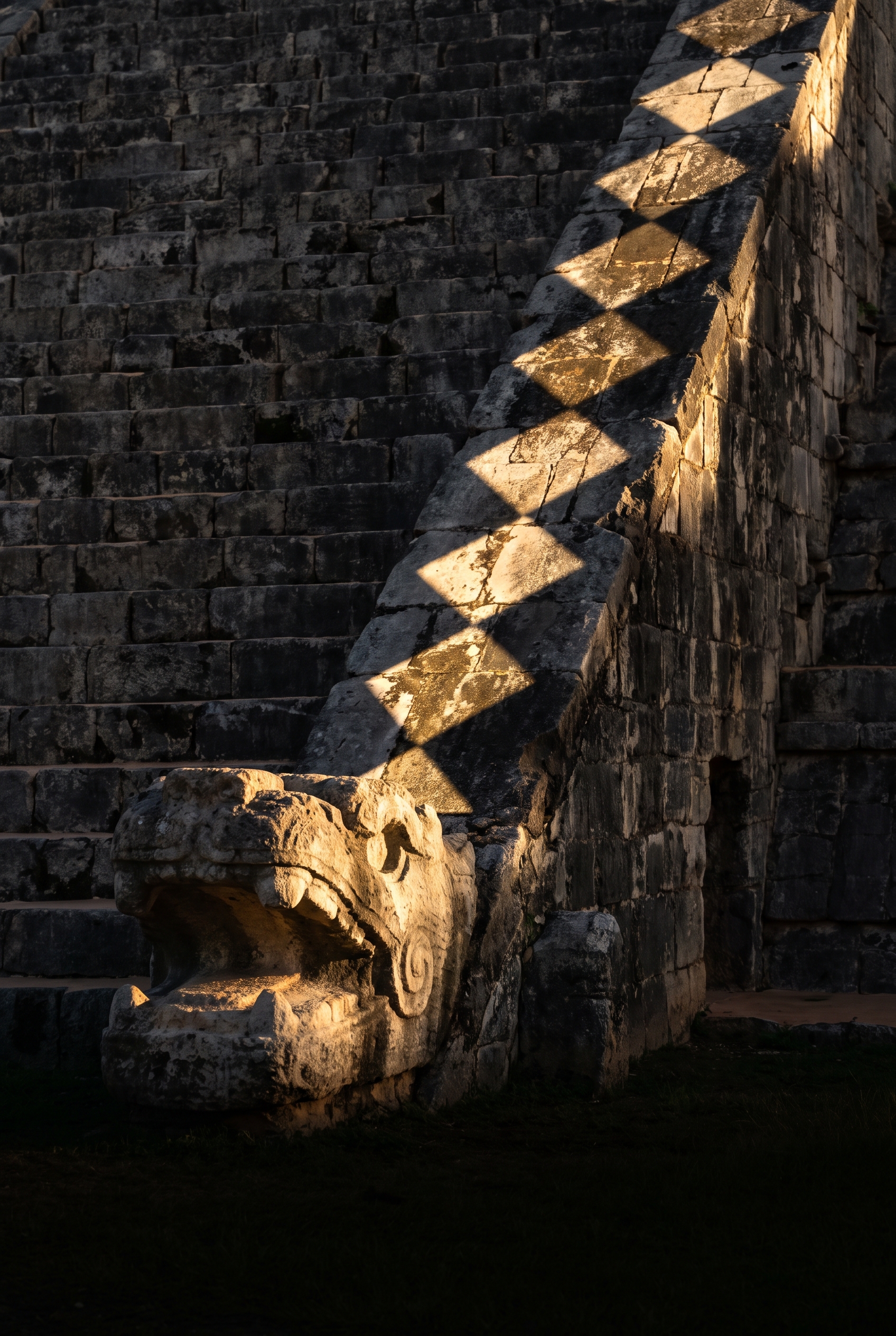
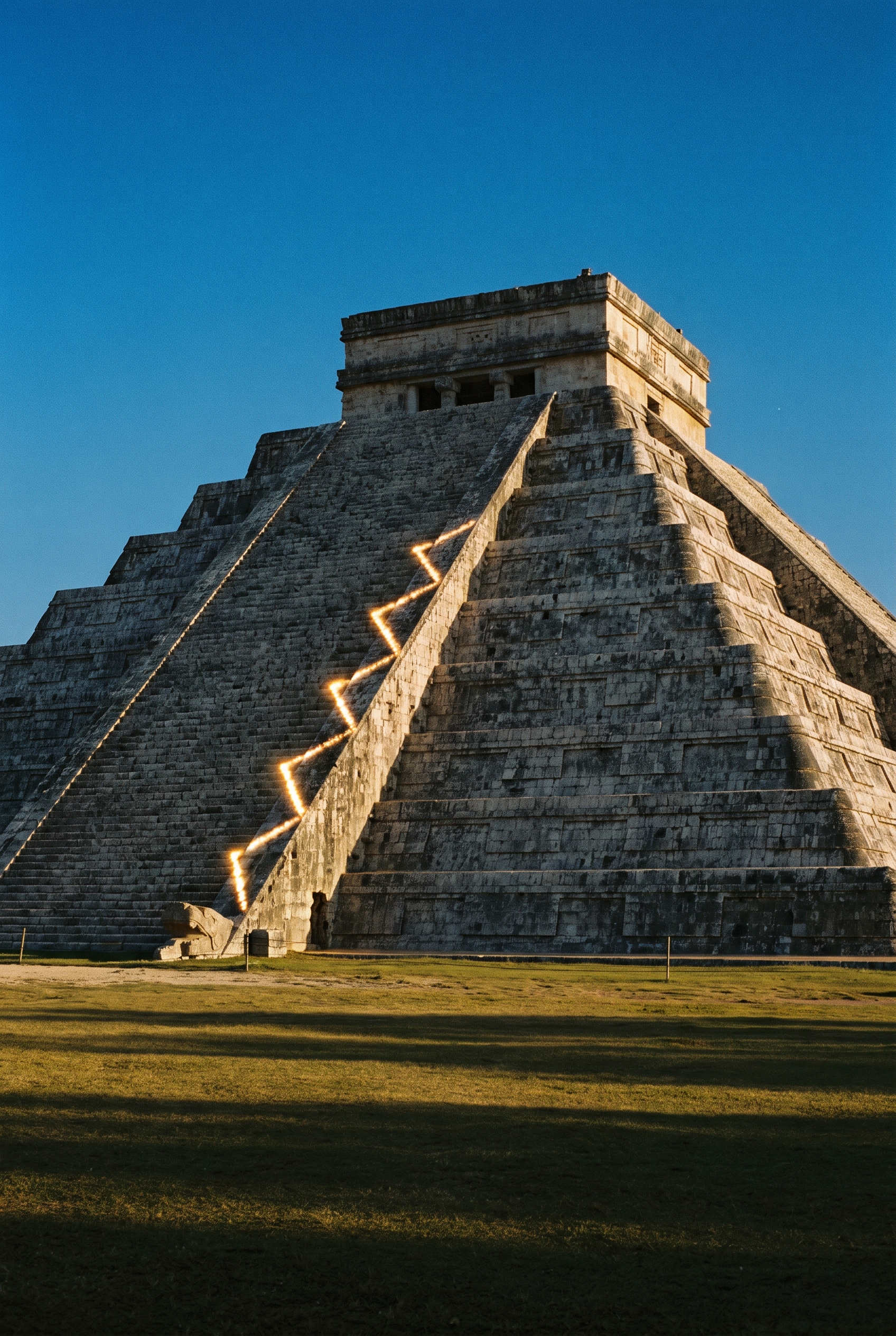
This happens around the two equinoxes, the days in March and September when day and night are close to equal length. You can see it for about a week before and after each one.[^explo]
The pyramid is called El Castillo, “the castle” in Spanish. It is also the Temple of Kukulcán, the feathered serpent god of the Maya.[^inah][^princeton]
A Pyramid That Counts the Year
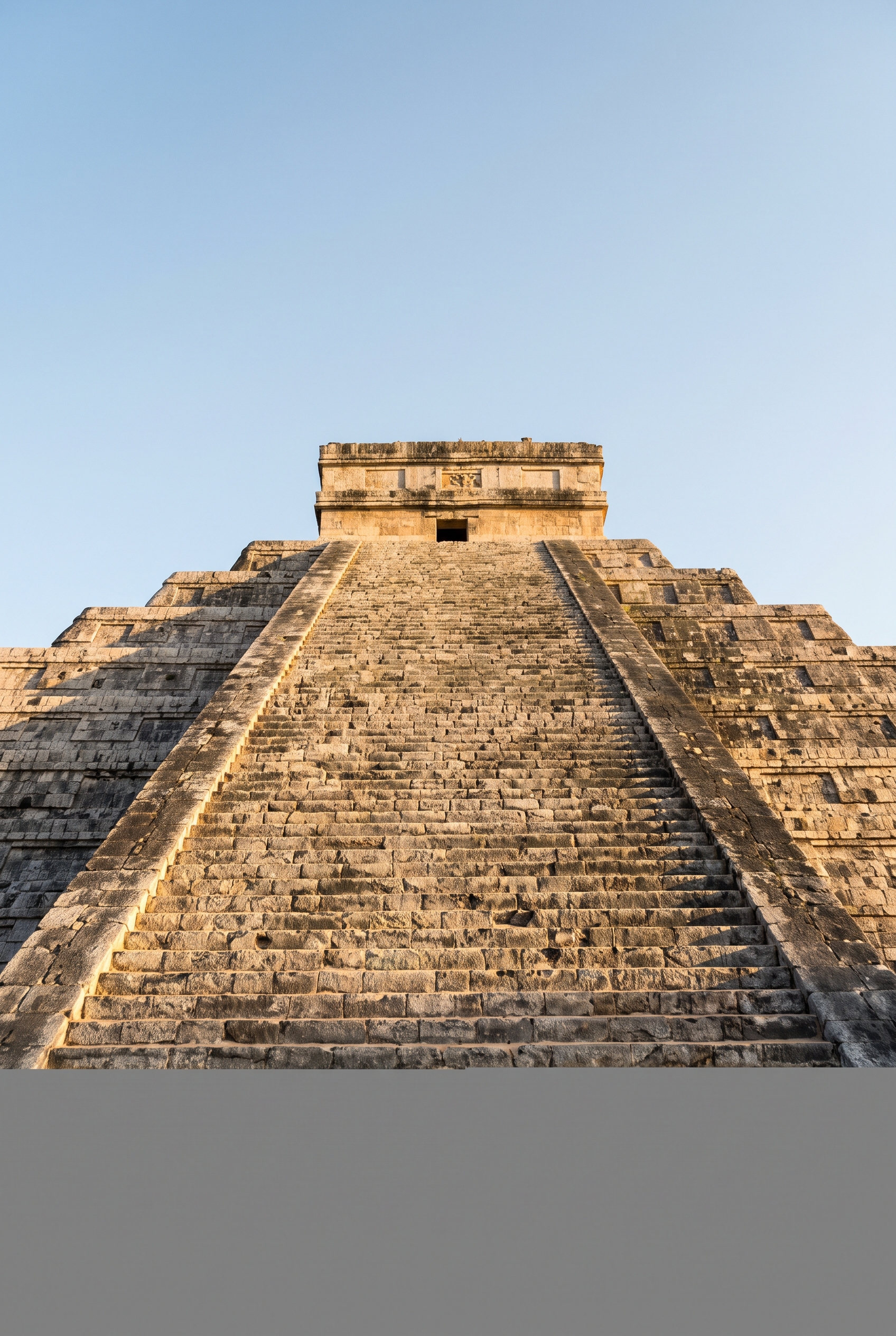
Mexico’s national institute of archaeology, INAH, adds a twist. Kukulcán may have begun as a man, a ruler of Chichén Itzá in the tenth century, who was honored after his death as a god linked to the spring and autumn equinoxes.[^inah]
Who Saw the Serpent First
In 1932, the American photographer Laura Gilpin made a chance visit to Chichén Itzá.[^princeton] She photographed El Castillo before sunset at the equinox. A University of Chicago essay calls it the first important photograph of the pyramid at that hour.[^plata] At the time, no one had suggested the shadow was planned.[^princeton]
That idea came much later. In 1969, the researcher Jean-Jacques Rivard suggested the Maya might have seen the shadow as Kukulcán himself, coming down to earth.[^slayman][^princeton]
Whether the builders meant it is still argued. INAH calls it “a carefully calculated effect of light and shadow.”[^inah] The Exploratorium, the San Francisco science museum, says “various signs suggest” it was made on purpose.[^explo] In 1996, Archaeology magazine reported that scholars still wondered.[^slayman]
A Maya Book in Dresden
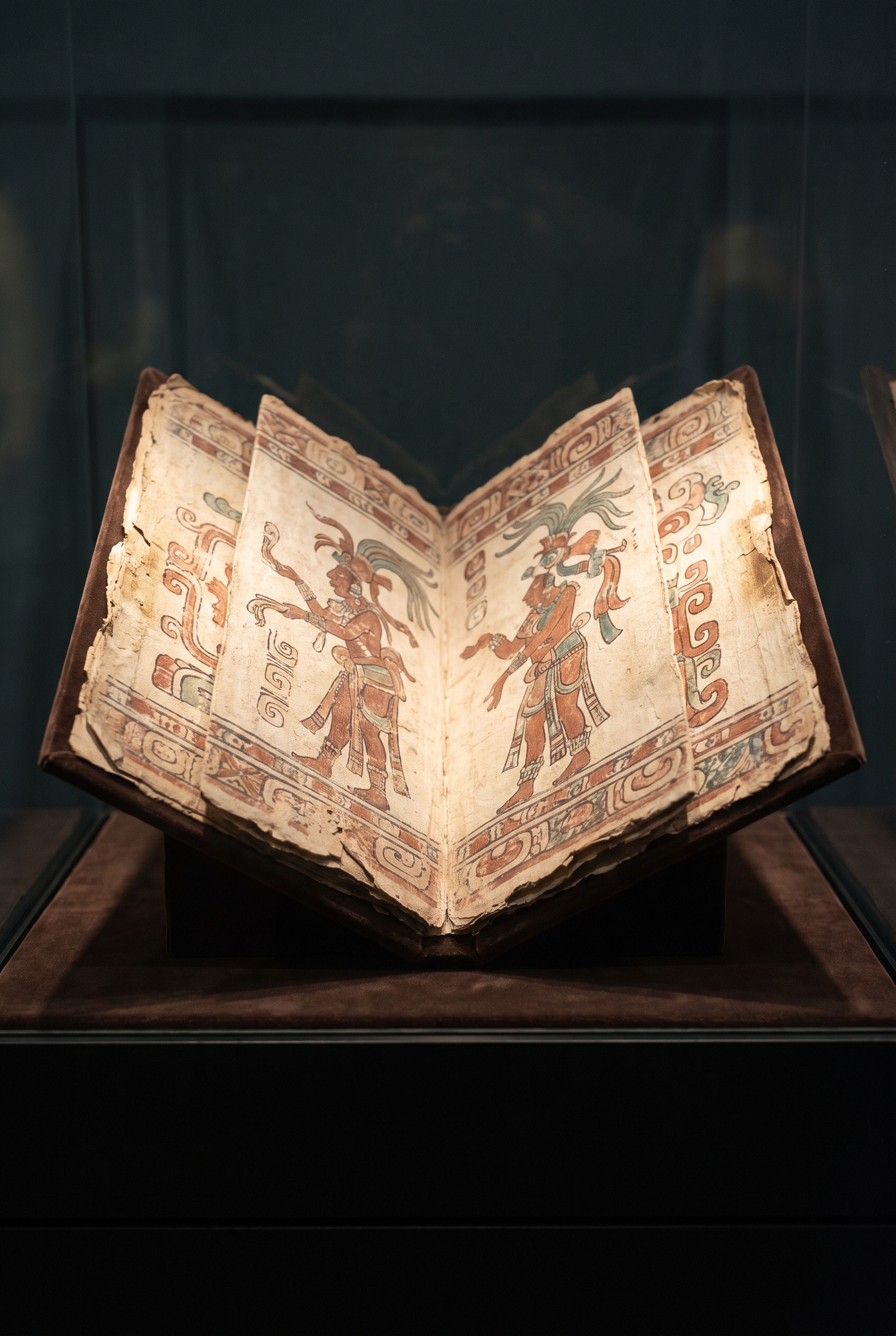
Far from Mexico, in 1739, Johann Christian Götze bought an old painted book from a private owner in Vienna. He ran the royal library in Dresden, Germany, and in 1744 he gave the book to it.[^wikicodex][^famsi]
It was a Maya book, now called the Dresden Codex. A codex is a handmade book. This one is a long strip of paper made from the inner bark of a wild fig tree, folded like an accordion into 78 pages.[^wikicodex] It is one of only four Maya books of its kind that survive.[^slub]
It may have come from Chichén Itzá itself. One scholar, Thompson, argued that the book was made in that area, because some of its painted symbols appear only on monuments there.[^wikicodex]
It almost didn’t survive Europe. During the bombing of Dresden in February 1945, it sat in a basement that flooded, and water badly damaged some of its pages.[^wikicodex][^famsi]
Five Pages for Venus
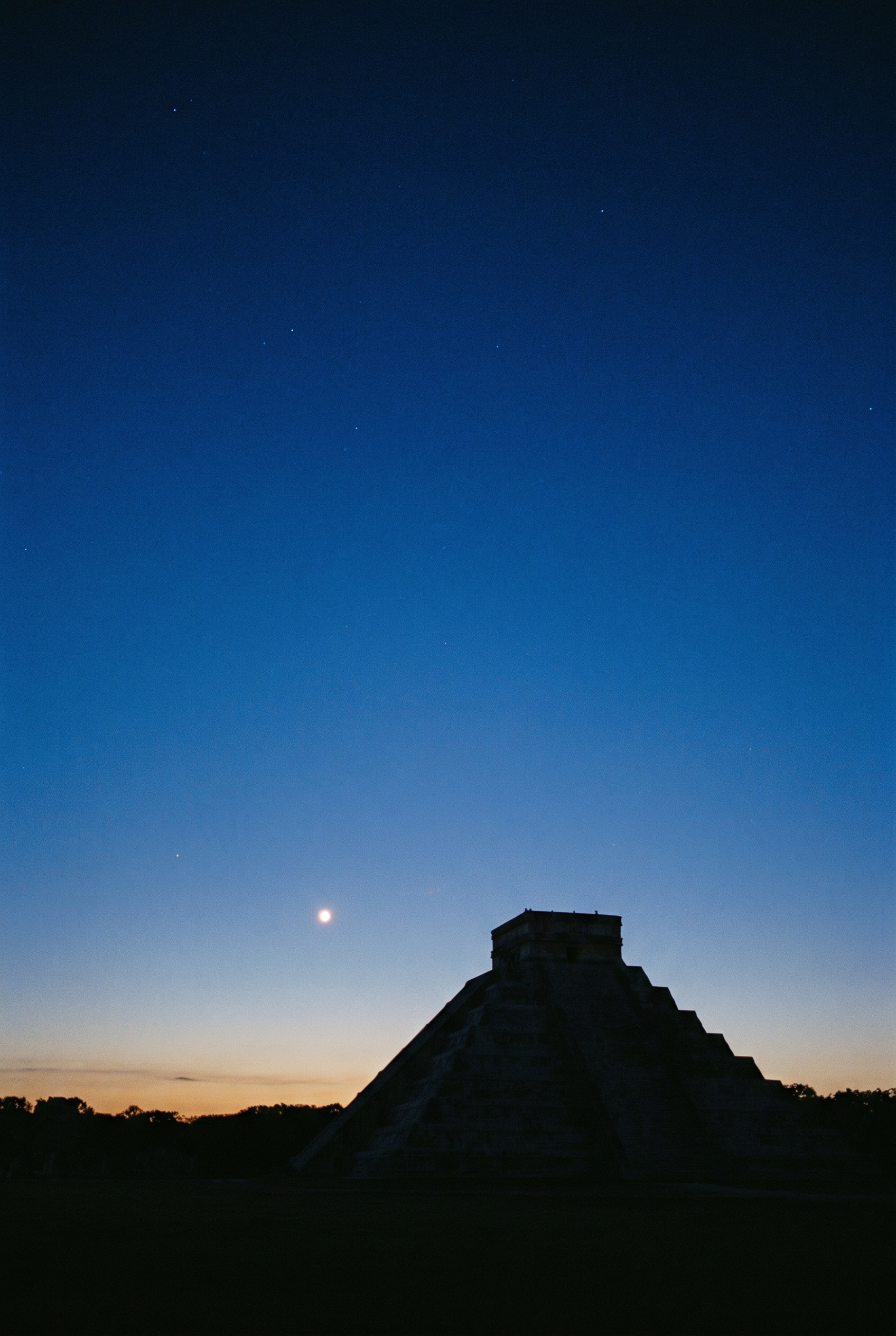
Venus moves in a loop that repeats. For about 263 days it shines as the morning star, a bright light before dawn. Then it disappears for about 50 days while it passes behind the Sun. It comes back as the evening star, after sunset, for another 263 days or so. Then it vanishes for about eight days as it passes in front of the Sun, and returns to the morning sky.[^eso] The whole loop takes about 584 days.[^eso]
The Maya counted the same loop. In the Dresden Codex, page 24 opens what scholars call the Venus table, and pages 46 to 50 follow Venus through five loops, one page for each.[^aldana][^juarez]
The table is built on four numbers, written in the Maya way with dots and bars: 236, 90, 250 and 8.[^juarez] That first number really is 236, not 263. The Maya marked the stretches of the loop at their own lengths, but the four still add up to the same 584 days.[^juarez][^eso] And five loops of 584 days make 2,920 days, which is exactly eight years of 365 days. Venus and the year come back into line together.[^juarez]
On each page there is a god on a throne, Venus as a figure hurling a spear, and a fallen victim.[^juarez] The pictures mark the moment Venus comes back as the morning star. For the Maya, that moment was tied to ritual, and through it to the work of ruling, worship and farming.[^juarez]
The person who worked out what all these numbers counted was Ernst Förstemann, a Dresden librarian with a head for mathematics. His study of the Venus table showed the world how closely Maya astronomers had followed the planet.[^nova][^tulane]
The Correction Made at Chichén Itzá
On average, Venus’s real loop is a little shorter than 584 days: 583.92.[^eso] Over many loops that small gap adds up, so a plain count of 584 slowly drifts away from the sky.[^ucsb]
The Venus table builds in a correction that pulls the count back into step with the real planet, the way leap days keep our own calendar in line with the seasons.[^ucsb] In 2016, Gerardo Aldana, an anthropologist at the University of California, Santa Barbara, argued that working out this correction was a genuine Maya discovery in mathematics and astronomy.[^ucsb]
He also argued where it was done: most likely at Chichén Itzá, some time between AD 800 and 1000, perhaps under K’ak’ U Pakal K’awiil, one of the most prominent figures in the city’s history.[^ucsb] The city that raised a pyramid for the feathered serpent may also be where the Maya perfected their count of Venus.
Still Watching
Picture an astronomer at Chichén Itzá, watching the sky before dawn for Venus to come back. When it rose, it was a sign to be met with ritual, and the Maya had counted the days so they would be ready for it.
People have always read messages in the sky. Now one arrives every morning, written just for you.


[^explo]: Exploratorium, El Castillo, Ancient Observatories: Chichén Itzá. [^inah]: INAH, Chichén Itzá, Instituto Nacional de Antropología e Historia. [^princeton]: Princeton University Art Museum, Laura Gilpin, Stairway, Temple of Kukulcán, Chichén Itzá, Yucatán (1932). [^popular]: Georges Fery, Chichén Itzá’s Shadows, Popular Archaeology (2020). [^plata]: Frida Plata, Photographs of the Castillo, CLAS Contextos, University of Chicago (2020). [^slayman]: Andrew L. Slayman, Seeing with Maya Eyes, Archaeology 49:4 (1996). [^wikicodex]: Wikipedia, Dresden Codex, and the scholarship it cites. [^famsi]: FAMSI, The Dresden Codex, Foundation for the Advancement of Mesoamerican Studies. [^slub]: SLUB Dresden, The Dresden Maya Codex, Saxon State and University Library Dresden. [^eso]: European Southern Observatory, The synodic period of Venus, Venus Transit 2004. [^aldana]: Gerardo Aldana, Discovering Discovery: Chich’en Itza, the Dresden Codex Venus Table and 10th Century Mayan Astronomical Innovation, Journal of Astronomy in Culture (2016). [^juarez]: Margarita Juárez Nájera and Mariana Castellanos, Elucidating the Visual Language of the Venus Table in the Dresden Codex, Estudios de Cultura Maya 56 (2020). [^nova]: PBS NOVA, Cracking the Maya Code: Time. [^tulane]: Tulane University Libraries, Groundbreaking Moments in Maya Hieroglyphic Decipherment. [^ucsb]: Jim Logan, An Ancient Mayan Copernicus, UC Santa Barbara News (2016), on Gerardo Aldana’s paper in the Journal of Astronomy in Culture.