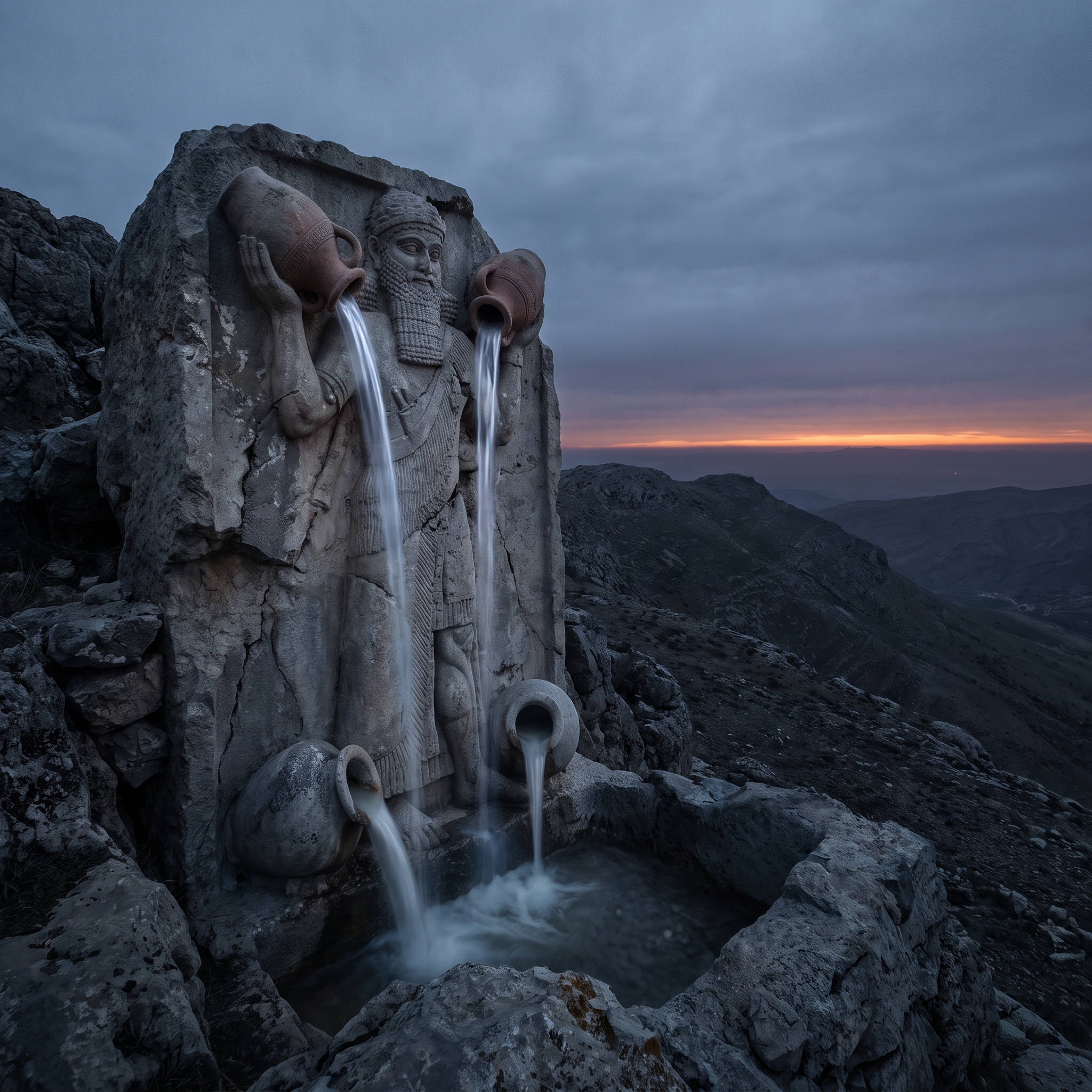
You already know the phrase. It came to most people in a song, the song went to number one in 1969, and it never really left.1 Behind it stands a much older picture: a giant figure tipping water out of a jar, one of the oldest shapes people drew in the sky.
Between those two things sits a long and surprising history. The Age of Aquarius means something now that it did not mean two hundred years ago. This is the story of how the meaning got built, and who built it.
The sky slipped
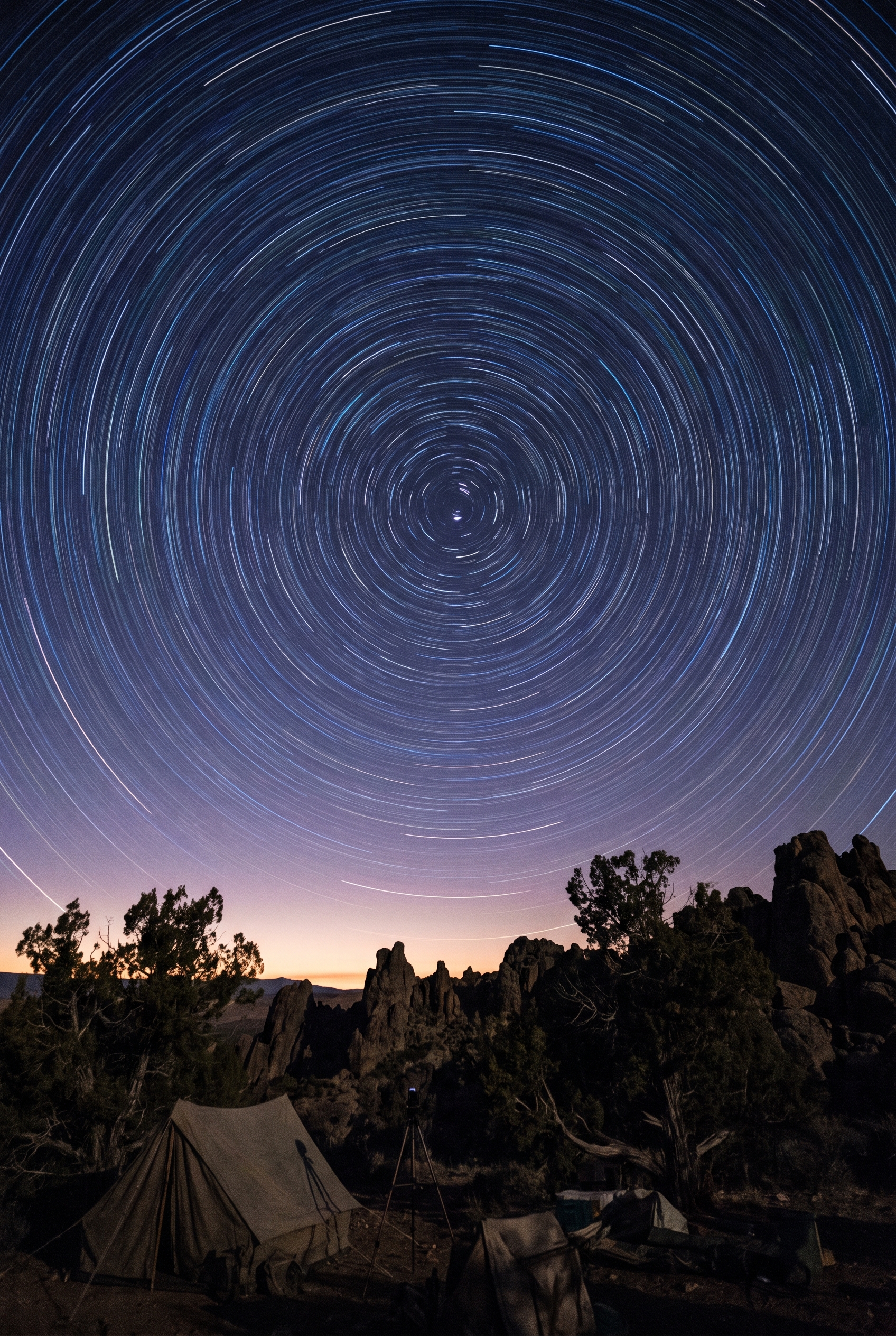
Earth wobbles. The Moon’s gravity, with some help from the Sun, pulls on the bulge around Earth’s middle, and the axis swings slowly around a cone. One full circuit takes about 26,000 years.2
While it turns, everything in the sky appears to shift by about 0.014 of a degree each year.2 That is roughly one degree every seventy years — too slow to notice in a lifetime, fast enough to matter across centuries.
Hipparchus caught it anyway. Around 130 BCE he compared old observations with his own and worked out that the equinox points had moved two degrees in a hundred and sixty-nine years. He named the effect the precession of the equinoxes.3
Divide that long circuit by twelve and each slice runs a little over 2,000 years. Those slices are the astrological ages. The equinox point has been drifting through Pisces, and one day it moves into Aquarius. That is the whole mechanism. Everything else in this article is about what people decided it meant.
Nobody agrees when it starts
Here is the first clue that we are dealing with a human story rather than an astronomical one. Ask when the Age of Aquarius begins and you get answers spread across two thousand years.
Terry MacKinnell puts it at 1447. John Addey put it at 3597. Rudolf Steiner said 3573. If you use the constellation boundaries the International Astronomical Union drew up in 1929, you get 2595.4
The historian Nicholas Campion went through the published claims and counted. Twenty-nine of them said the age had already arrived in the twentieth century. Twelve put it in the twenty-fourth.4
This is not a failure of astrology. It is what happens when you draw a line across a sky that has no lines in it. The constellations are uneven. They overlap. Where Pisces stops and Aquarius starts is a decision, not a measurement — and different people made it differently.
The water-bearer before any of this
Go back far enough and the figure is there without any of the modern meaning attached.
To the Babylonians he was Gula, the Great One — a standing male figure, sometimes gigantic, holding vases that overflow with streams of water. He towers above the mountaintops. The vases he holds up are the rains falling from the sky; the vases at his feet are the freshwater Abyss below the earth, the source of rivers and springs.5
He is a seasonal marker. His rising means the rivers filling and the winter rains arriving. In farming terms he is the irrigator, the one who waters the barley before the spring harvest.5
He also keeps good company. The Great One is tied to Enki — Ea in Akkadian — the god of wisdom and fresh water. One Babylonian astrology text puts it flatly: “the Great One is the Lord of springs, Ea.”5
And there is a detail you can still see today. The cuneiform sign for water was a simple zigzag. That sign is the ancestor of ♒, the glyph astrologers still write for Aquarius.5 Every chart drawn this week carries a Babylonian word for water on it.
Water, wisdom, the rains coming. Nothing yet about a coming age of human awakening.
The same is true in the chart. For most of astrology’s history, Aquarius is fixed air, and its ruler is Saturn. That gives you a sign of structure, distance, endurance, cool judgement. A useful sign. Not a utopian one.
Hold on to that, because it is about to become the interesting part.
A planet nobody knew what to do with
On 13 March 1781, William Herschel found a new planet. It was the first ever discovered with a telescope, and it changed the size of the known solar system overnight.
And for a very long time afterwards, it changed nothing at all about Aquarius.
This is the part of the story that usually gets skipped. The tidy version goes: new planet, restless and disruptive, gets handed to the sign of the future, and Aquarius becomes what we now think it is. It is a satisfying story. It is also much too fast.
Some astrologers did make the suggestion early. Raphael — the pen name of Robert Cross — is often credited with proposing Aquarius as the house of Uranus in books of the 1880s and 1890s, though the attribution is passed around more often than it is sourced. But a suggestion is not a settlement, and you can see how unsettled it stayed by opening a book.
Alan Leo was the most widely read astrologer of the modern revival. His How to Judge a Nativity was a standard text. Turn to page 26 and there is a table of the twelve signs — characteristic, quality, element, description, ruler. Aquarius: Memory, Fixed, Air, “The Man.” Ruler: ♄. Saturn.
Turn the page and Leo lists the planets, Uranus among them, and then says it plainly: “No signs have been allotted to either ♅ or ♆ as houses, but for the present they may be taken as substitutes for the Sun and Moon.”6
That edition was printed in 1928.
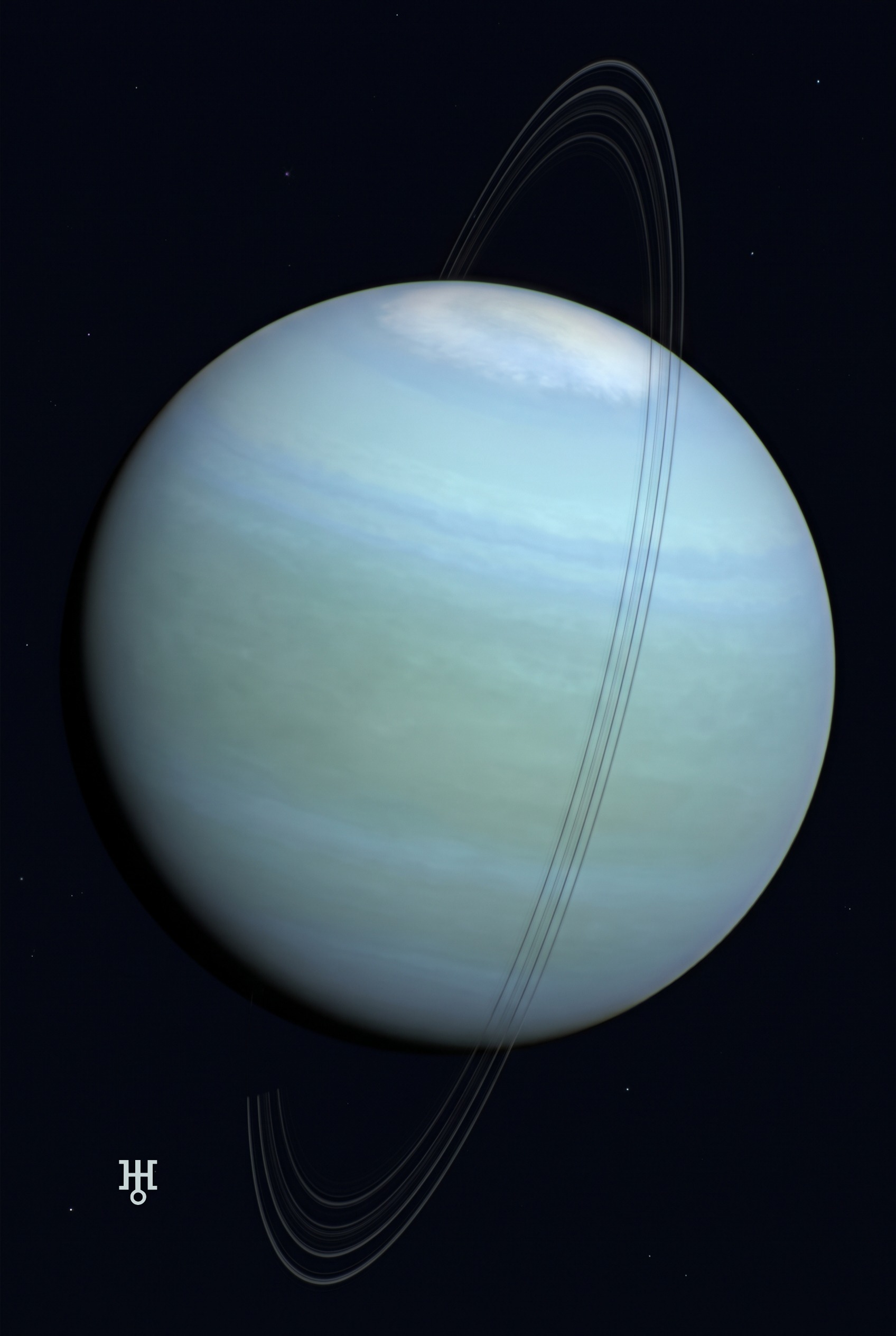
One hundred and forty-seven years after Herschel found the planet, the standard textbook still had not given it a sign. Uranus was in the book. It simply had no home. And Leo was no holdout on the fringe of the subject — he was a Theosophist himself, working inside the very movement that was busy building an Aquarian future.7
So the discovery did not hand anyone a meaning. A planet is an object. It arrives with nothing written on it. Somebody has to decide what it signifies, and then enough other people have to agree — and that took generations, not a moment.
Which raises the real question. Not what did the new planet mean? but why did it come to mean that, and why then?
Theosophy builds an age on top
The answer has a lot to do with who needed the sign.
The idea of astrological ages, as a scheme of world history with a great turning just ahead, is mostly a nineteenth-century development. It was taken up and promoted by the Theosophical Society and the movements that came after it, and from there it passed into what we now call the New Age — a phrase that carries the Aquarian idea inside it.8
You can see why the sign suited the purpose. Here is a figure pouring water out of a jar, endlessly, for everybody. If you are looking for an image of knowledge spilling out to all of humanity, it is hard to do better. And by the early twentieth century Aquarius was beginning to carry the newest planet in the sky — the one associated with sudden change and the breaking of old forms.
A sign that meant the future was exactly what a movement about the future required. The meaning did not fall out of the telescope. It was assembled, by people with something to build.
1967: the phrase leaves astrology
Then it escaped.
James Rado and Gerome Ragni wrote the lyrics, Galt MacDermot wrote the music, and “Aquarius” opened the 1967 musical Hair. Two years later the 5th Dimension paired it with another song from the show and took the medley to number one on the Billboard Hot 100 on 12 April 1969. It stayed there six weeks — the first medley ever to top the American pop chart.1
After that, the Age of Aquarius no longer belonged to astrologers. It belonged to everyone. Millions of people could sing about it who had never read a chart, never heard of precession, and would not have been able to say which planet ruled anything.

That is the last step in the assembly, and in some ways the most decisive. A phrase that reaches that many people stops being a technical term. It becomes a mood.
What we inherited
Lay the pieces back down in order.
A Babylonian giant with his overflowing vases, three thousand years ago, holding the rains and the Abyss. A Greek and then a European inheritance in which Aquarius is fixed air, ruled by Saturn, and means nothing like what we now expect. A planet found in 1781 that astrologers left without a sign for generations. A Victorian suggestion that took decades to catch. A movement that needed a sign pointing at the future. A Broadway song.
That is what the phrase carries now. All of it at once.
None of this makes the Age of Aquarius less interesting. If anything it makes it more so, because you can watch it being made — you can open a book from 1928 and see the meaning not there yet. Most ideas do not leave a trail that clear.
What you do with that is up to you.
Sources
- “Aquarius/Let the Sunshine In,” Wikipedia — https://en.wikipedia.org/wiki/Aquarius/Let_the_Sunshine_In ↩
- “Chapter 2: Reference Systems,” Basics of Space Flight, NASA Science — https://science.nasa.gov/learn/basics-of-space-flight/chapter2-1/ ↩
- “The Precession of the Equinoxes,” NASA (Stargazers) — https://pwg.gsfc.nasa.gov/stargaze/Sprecess.htm ↩
- Nicholas Campion, The Book of World Horoscopes (Bournemouth: The Wessex Astrologer, ISBN 978-1-902405-15-5), pp. 489–495. Figures as summarised, with that page range, at https://en.wikipedia.org/wiki/Age_of_Aquarius ↩
- Gavin White, Babylonian Star-lore, pp. 25–7 and 121–3, excerpted by permission at Skyscript — https://www.skyscript.co.uk/babylonian_aquarius.pdf ↩
- Alan Leo, How to Judge a Nativity: the Reading of the Horoscope, 4th ed. (“Astrology for All” Series, Vol. III; London: “Modern Astrology” Office, Ludgate Circus, 1928), table of signs p. 26, quotation p. 27. Scans consulted directly — https://archive.org/details/howtojudgenativi00leoa ↩
- Bessie Leo, The Life and Work of Alan Leo, Theosophist, Astrologer, Mason — https://archive.org/details/lifeworkofalanle00leob ↩
- Wouter J. Hanegraaff, New Age Religion and Western Culture: Esotericism in the Mirror of Secular Thought (Albany: State University of New York Press, 1998), ch. 12 “The New Age”, §2 “The Age of Aquarius”, pp. 333–344 — https://sunypress.edu/Books/N/New-Age-Religion-and-Western-Culture ↩