The Age of Aquarius: The Most Famous Idea in Astrology
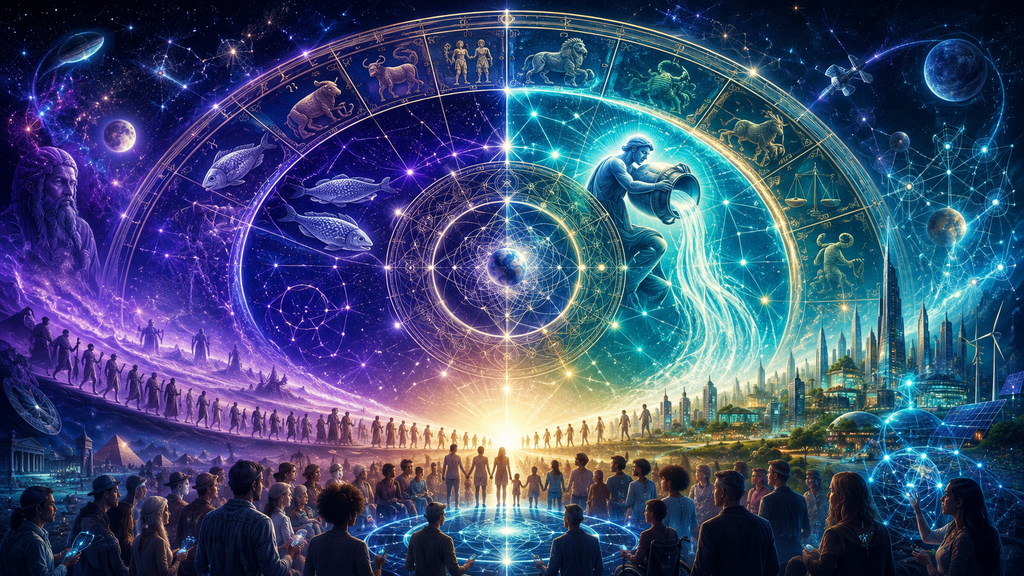
At the heart of the modern Age of Aquarius is the idea of an awakening collective consciousness — a growing sense that humanity is not simply a collection of separate individuals, but part of a larger psychological, cultural, and spiritual whole.
In this view, Aquarian change is not only about new technology or new institutions; it reflects a shift in how people understand themselves in relation to one another. Ideas, symbols, fears, hopes, and movements seem to move through society with increasing speed, revealing patterns that feel larger than any single person.
In 1969, a song went to number one in America and stayed there for six weeks.
“This is the dawning of the Age of Aquarius.”
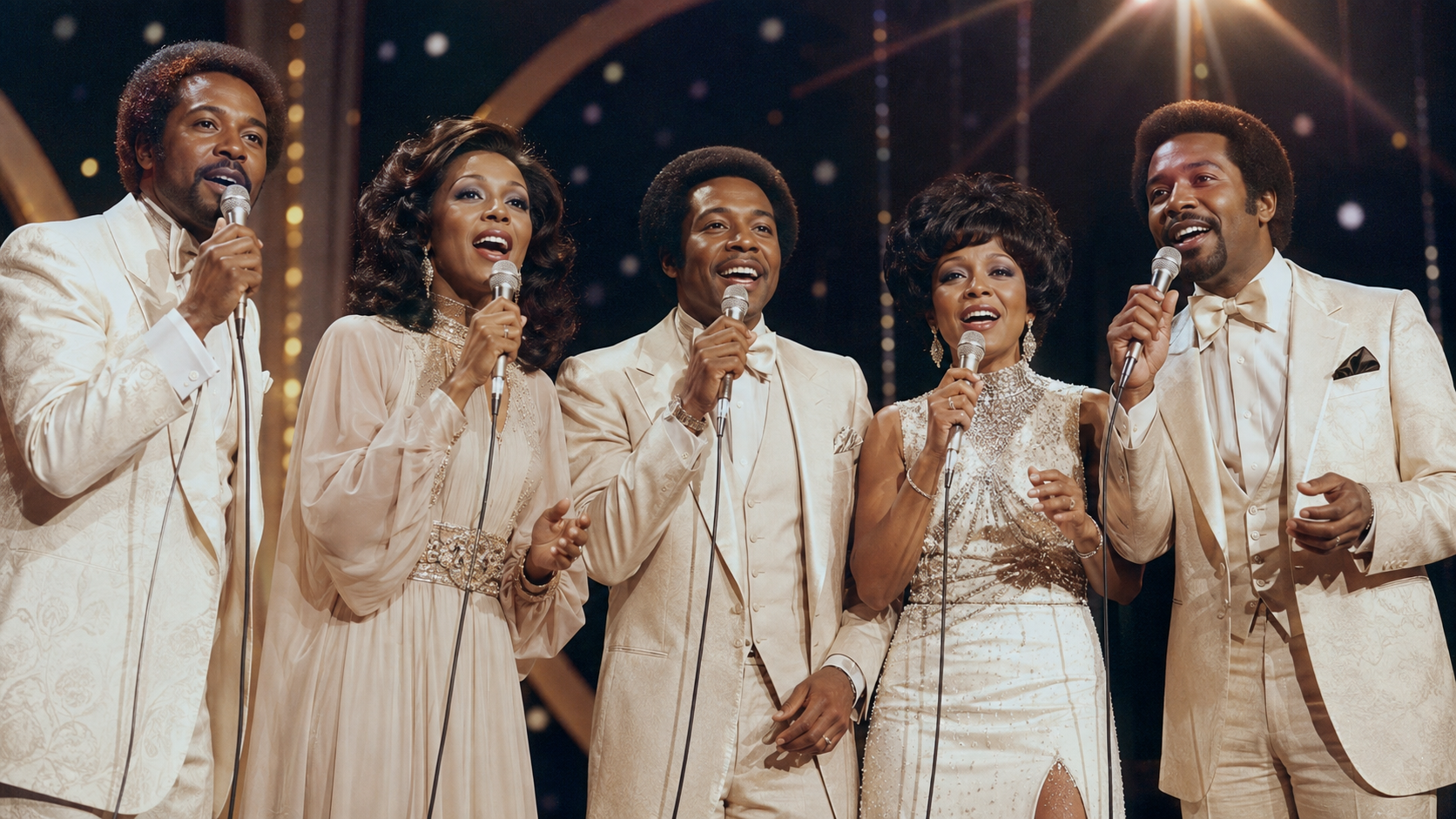
The song was “Aquarius/Let the Sunshine In,” and the group singing it was The 5th Dimension — Marilyn McCoo, Billy Davis Jr., Florence LaRue, LaMonte McLemore and Ron Townson. This song made the phrase ‘The Age of Aquarius part of the popular western imagination.
Why are we entering the Age of Aquarius
Spin a top. Watch the top of it. It doesn’t stay perfectly still — it makes a slow, lazy circle while the top spins fast.
The Earth does that too.
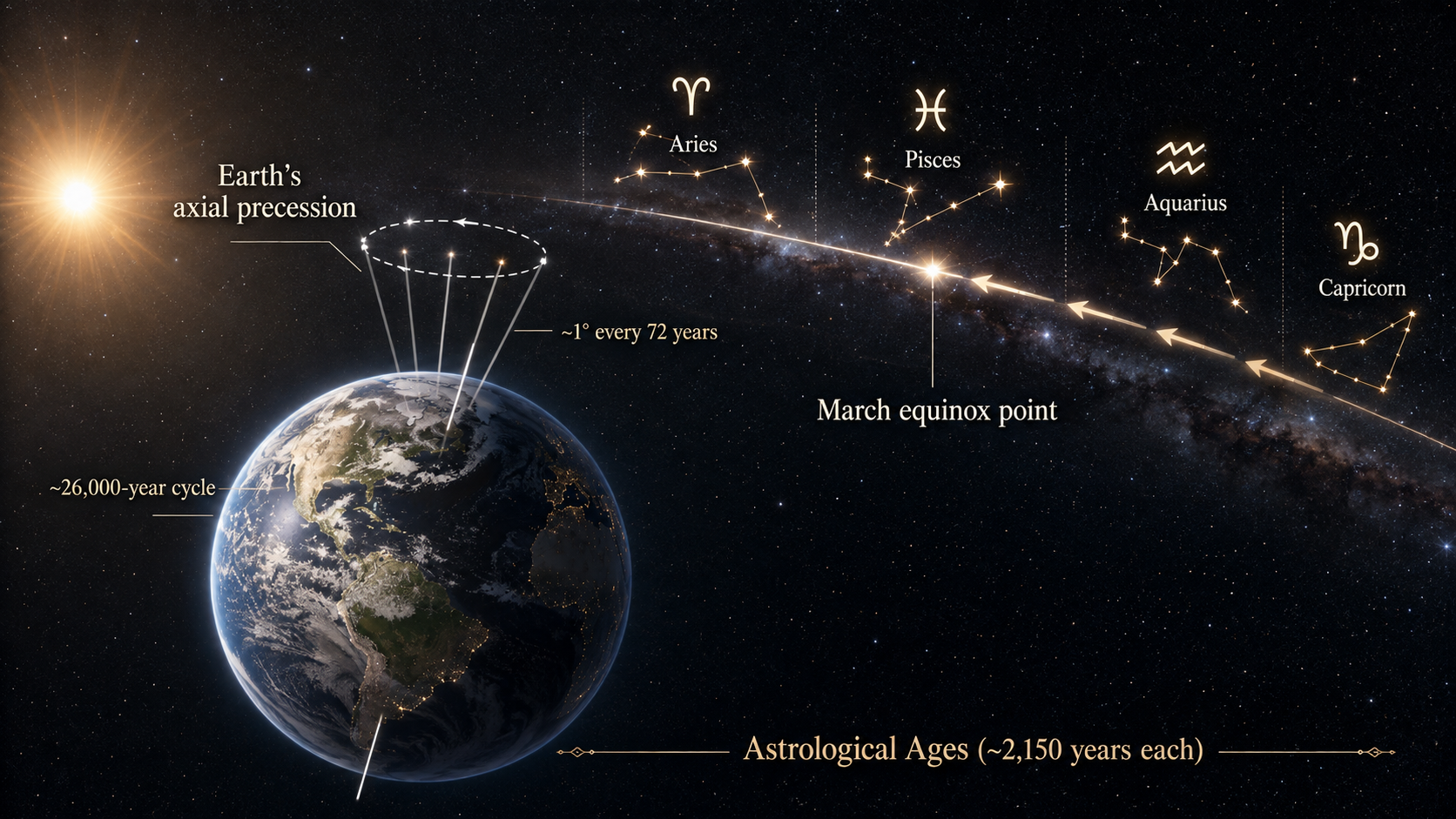
Our planet spins once a day. But the direction of its axis also traces a giant slow circle, like that wobbling top. One complete precessional cycle takes about 25,772 years. Divide that full 360-degree cycle into the twelve zodiac signs and each astrological age covers one-twelfth of it — about 2,150 years.
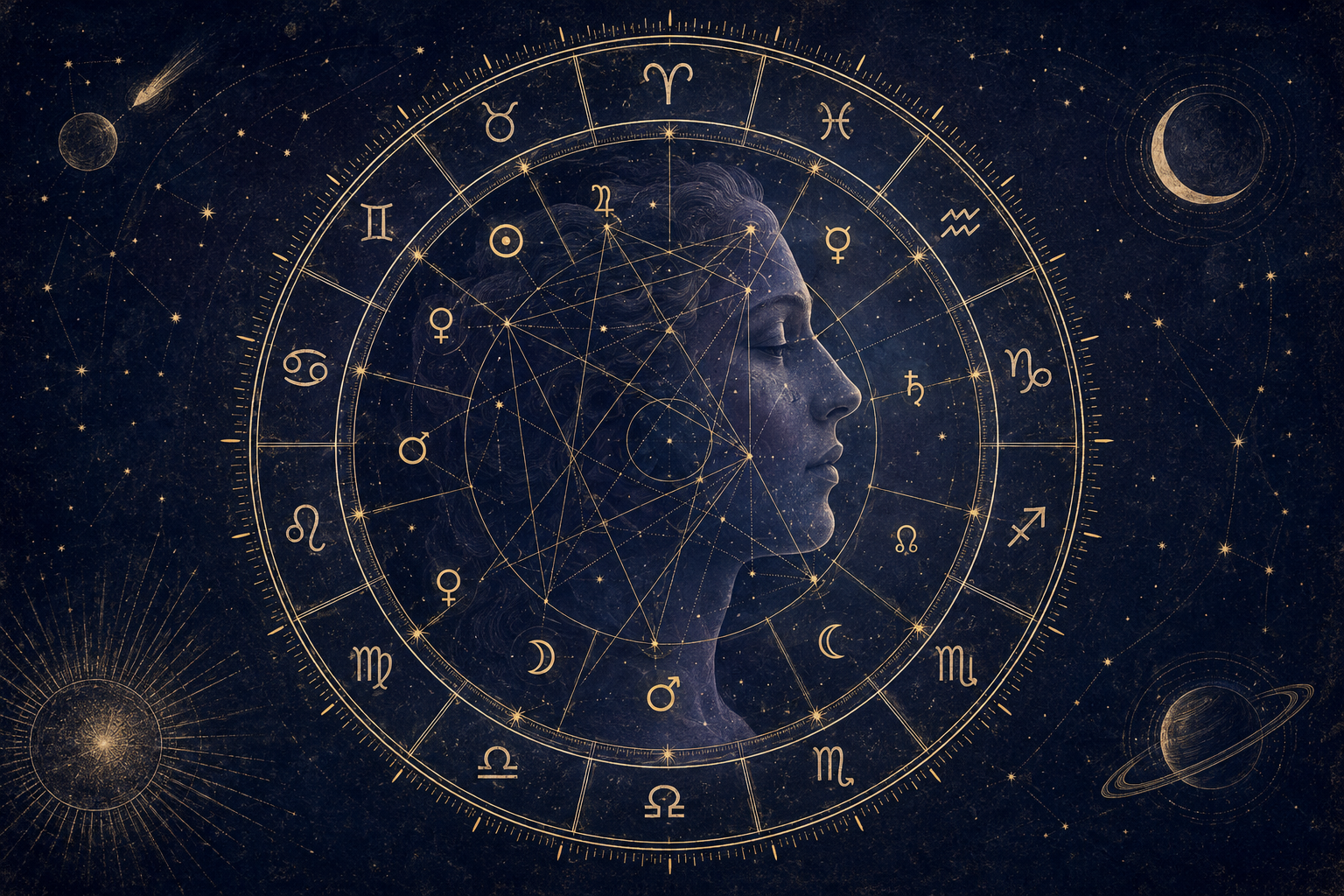
Is the Age of Aquarius here? Almost here? Still five hundred years away? The more useful question is the one the symbol asks now: What are we doing with knowledge, staying connected, networks, freedom, crowds, technology, and one another?
You do not need the correct date to have the correct conversation.
Past, present, and future: where we actually are
Step back far enough and the Age of Aquarius stops being a date argument and becomes something better: a place to stand in a very long story.
That full wobble — about 25,772 years — has an old and rather grand name: the Great Year.
Divide it by the twelve constellations and each stretch comes out around 2,150 years.
The past: three civilizations built this, one piece at a time
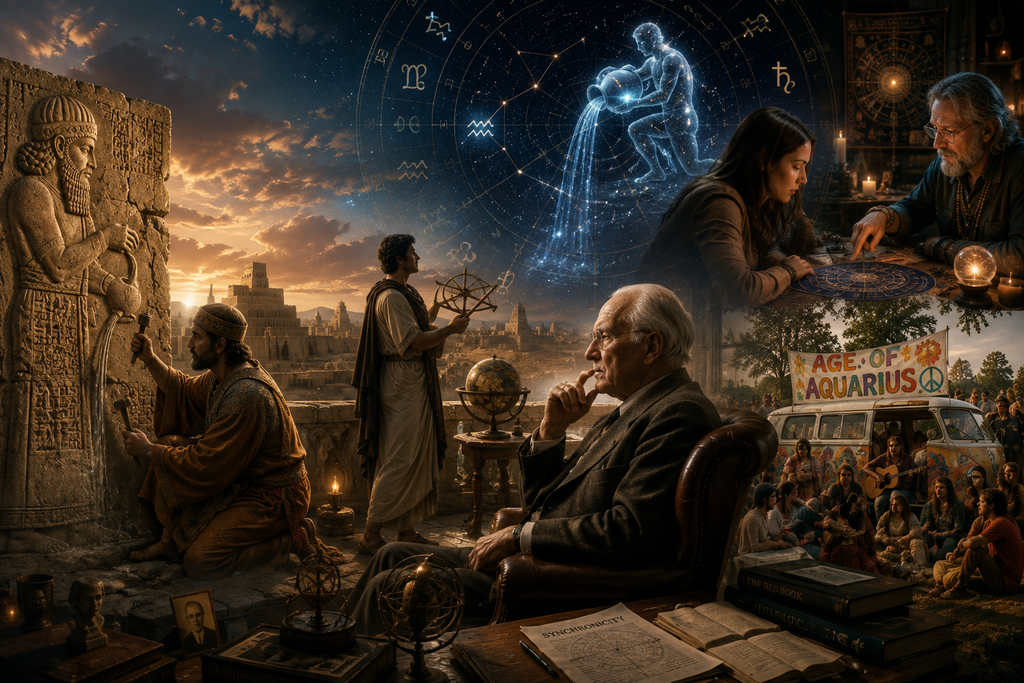
Nobody invented the Age of Aquarius in one go. Three cultures each handed over a different part, across roughly four thousand years — and none of them had the finished idea.
The Babylonians looked at that patch of sky and saw a god tipping a water jar. They had the picture, four thousand years ago, carved in stone. They did not have an “age.” (Hold onto that water jar — it comes back at the end of this piece, and it is the best fact in the whole story.)
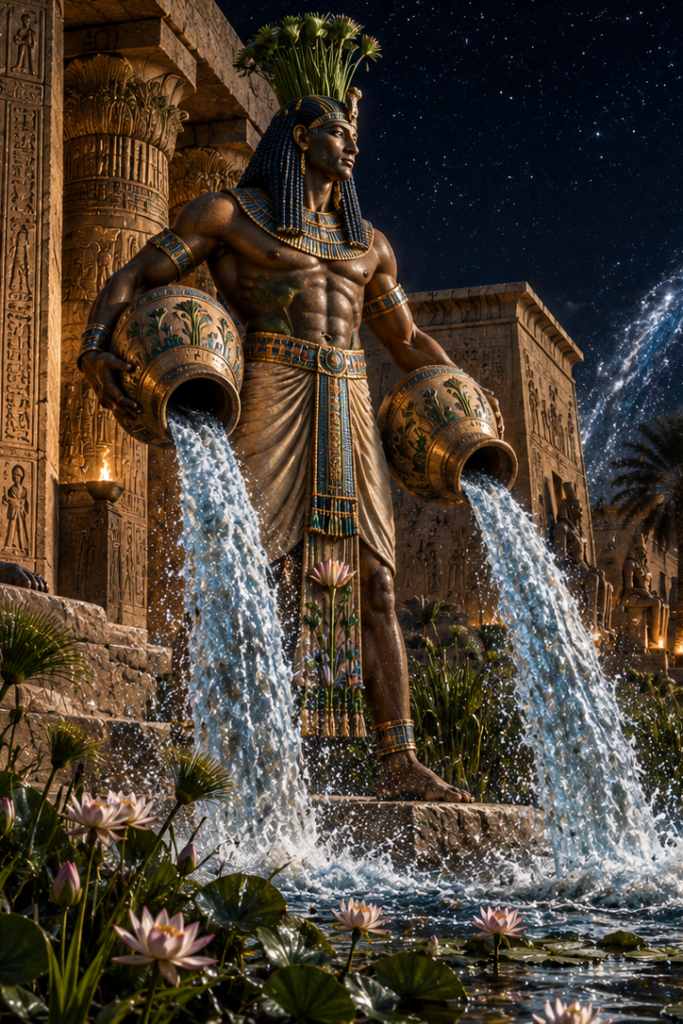
Along the Nile, the sky-figure’s water lined up with the annual flood — the inundation that soaked the fields and made the next year’s food possible. Egypt read the sky as a calendar you could farm by: watch for the sign, and you know what season is coming.
The Greeks took the Babylonian water-pourer and made him Ganymede, the youth carried up to be cupbearer to the gods, and sometimes Deucalion, the man who survived the great flood. In Latin he finally became Aquarius, “water-carrier,” which is the name we still use.
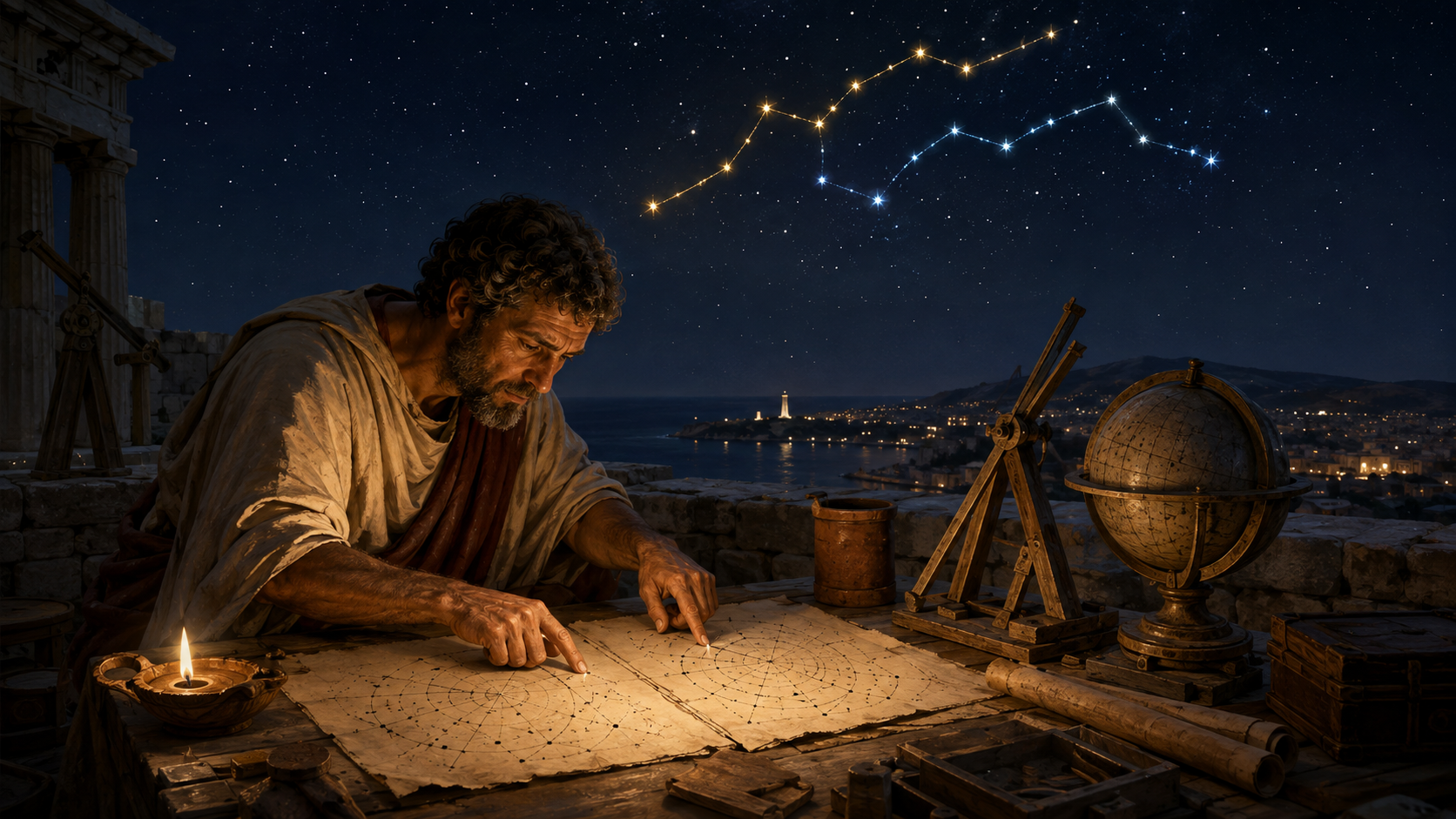
And then a Greek named Hipparchus, around 130 BCE he realized the sky had drifted. Not the stars moving individually: the whole reference frame, sliding. Without that discovery there is no concept of an age, because nobody knows the spring point ever goes anywhere.
So the Greek period really is the hinge. It gave us the name we say out loud and the motion underneath it.
One thing to keep straight, though, because it is easy to overshoot: the Greeks never said “the Age of Aquarius.” They found the drift and named the constellation. Slicing history into twelve named ages is a much later idea — barely 150 years old, worked up by Victorian writers and occultists, and handed to the world by a Broadway musical. Greece supplied the parts. The nineteenth century did the assembly.
The ladder: the ages behind us
Because the wobble runs backward, the ages count down through the zodiac rather than up. Reading from the past toward us, astrologers usually describe it like this:
The future: what comes after Aquarius?
The ages keep going. The wobble does not stop. And because it runs backward through the zodiac, the age after Aquarius is Capricorn — the strangest creature up there, half goat and half fish, at home on the mountain and in the deep water. The patient climber. The one who keeps going, even underwater.
Whatever it turns out to mean, it starts roughly two thousand years from now. Nobody reading this will see it. Neither will your great-grandchildren, or theirs, or theirs.
And then, eventually, the wheel comes all the way around.
One cautionary note: the Water-Bearer was pouring out a flood
Long before Aquarius meant genius, rebellion, computers, or peace and love, that patch of sky belonged to Babylon. They called it GU.LA — “The Great One.” It stood for the god Ea (Sumerian Enki), god of fresh water and wisdom. On cylinder seals and carved stones from four thousand years ago, he’s shown tipping an overflowing vase.
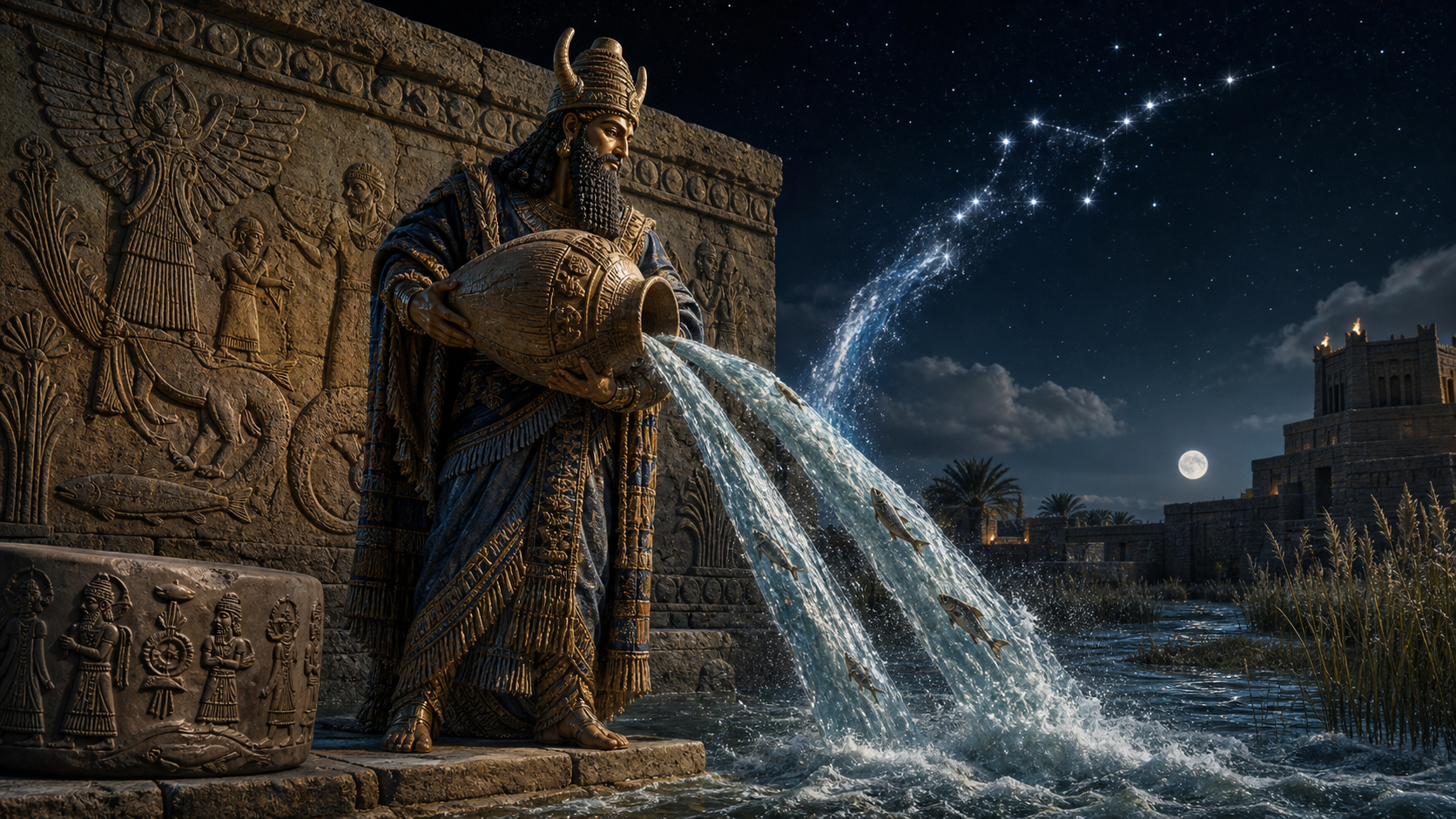
And the water he’s pouring wasn’t a gentle stream. It meant flood.
In Mesopotamia, floods were destroyers. In Egypt, the Nile’s yearly flood was the opposite — the thing that made life possible. Later the Greeks handed the figure to Ganymede, cupbearer to the gods, and to Deucalion, the man who survived the great flood. Notice that the flood keeps showing up, even as the story changes hands across three cultures.
So the oldest meaning of Aquarius is water that can destroy you or feed you, depending.
Other Aquarius

Messages from the Universe delivers one personal message every morning — written just for you, based on the actual sky. No jargon. No predictions. Just a moment that feels like it was meant for you. Because it was.
People have been reading the sky for four thousand years. Yours arrives tomorrow morning.